 Rather
Reveal the hidden picture
Nonogram
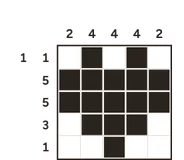
Number clues hide a picture. Fill the squares and watch it appear.
Also known as griddlers, hanjie or paint by numbers.


How it works
-
-
-


Key
-

-


What you get from it
Two rewards in one: the slow click of logic, line by line, and a picture taking shape at the end. Every square follows from the clues, so you are never painting at random.
The grids read in blocks of five, so even a 15×15 stays easy on the eyes. Each picture has a name, shown when you solve it.
Rules
Each row has numbers on its left and each column has numbers above it. They are the lengths of the runs of filled squares in that line, in order, with at least one empty square between runs. A line that reads 0 is empty. Fill the grid so that every line matches its clue.
How to play in Rather
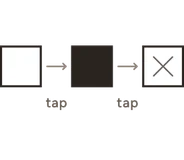
Tap a square once to fill it, twice to mark × for “no square here”, and again to clear it. There is no drag: one tap, one square.
Thick lines every five squares help you count. Undo steps back through every tap.
Where to start
Start with the big clues. On a 10-square row, a clue of 7 can start at the left edge or end at the right, and both ways cover the middle four squares. Fill those four.
Then the exact fits: on a 6-square line, 2 3 takes 2, a gap and 3, which is all six squares. A 0 line gets × all the way.
Once a line has all its runs, the rest of it is empty. Each square you fill or cross gives the lines across it something new to work with.
Edges help too. If a row’s first run is 3 and its first square is filled, the next two are filled and the square after them stays empty.
Then work rows and columns in turn. A bigger picture comes together in many small passes, each adding a few squares.
When you’re stuck
Tap Hint. It clears wrong marks first, then works one line at a time and says why: “This row’s blocks are all in, so the rest stays empty.”
Errors underlines filled squares that aren’t in the picture and × marks that are. It also says when a row or column has too many squares filled.
A hint step fills squares or crosses them, never both, so you can follow its reasoning.
Sizes
- Easy 10×10 A small picture in about a minute.
- Medium 12×12 More lines to cross-check.
- Hard 15×15 Read in blocks of five.
Questions
Do I have to mark the empty squares?
No. × marks are only for you. The puzzle is solved when the filled squares match the picture.
What do the pictures show?
Generated shapes, mirrored left to right, rather than drawn motifs.
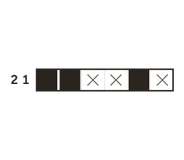
Why does a row read 1 1 2?
Three runs in that order: one square, a gap, one square, a gap, then two squares together.